

Counterfeit Food Found To Be Far More Widespread Than Suspected
- By STEPHEN CASTLE and DOREEN CARVAJAL - June 26, 2013 - The New York Times
GREAT DALBY, England — Invisible from the roadway, hidden deep in the lush English countryside, Moscow Farm is an unlikely base for an international organized crime gang churning out a dangerous brew of fake vodka.
But a quarter of a mile off a one-lane road here, tens of thousands of liters of counterfeit spirits were distilled, pumped into genuine vodka bottles, with near-perfect counterfeit labels and duty stamps, and sold in corner shops across Britain. The fake Glen’s vodka looked real. But analysis revealed that it was spiked with bleach to lighten its color, and contained high levels of methanol, which in large doses can cause blindness.
No one knows the harm done to those who drank it — or whether they connected any illness with their bargain vodka — but cases of poisoning have been reported throughout Europe, including in the Czech Republic, where more than 20 people died last year after drinking counterfeit liquor.
The Europe-wide scandal surrounding the substitution of cheaper horse meat in what had been labeled beef products caught the most attention from consumers, regulators and investigators this year. But in terms of food fraud, regulators and investigators say, that is just a hint of what has been happening as the economic crisis persists.
Investigators have uncovered thousands of frauds, raising fresh questions about regulatory oversight as criminals offer bargain-hunting shoppers cheap versions of everyday products, including counterfeit chocolate and adulterated olive oil, Jacob’s Creek wine and even Bollinger Champagne. As the horse meat scandal showed, even legitimate companies can be overtaken by the murky world of food fraud.
“Around the world, food fraud is an epidemic — in every single country where food is produced or grown, food fraud is occurring,” said Mitchell Weinberg, president and chief executive of Inscatech, a company that advises on food security. “Just about every single ingredient that has even a moderate economic value is potentially vulnerable to fraud.”
Speaking at a recent conference organized by the consulting firm FoodChain Europe, Mr. Weinberg added that many processed products contain ingredients like sugar, vanilla, paprika, honey, olive oil or cocoa products that are tainted.
Increasingly, those frauds are the work of organized international criminal networks lured by the potential for big profits in an illicit trade in which most forgers are never caught. The vodka gang boss, Kevin Eddishaw, was — but not before he had counterfeited liquor on an industrial scale, generating profits to match, according to investigators, who estimated that his distillery produced at least 165,000 bottles costing the British government £1.5 million, or $2.3 million, in lost tax revenue.
“He was living a very nice lifestyle,” said Roddy Mackinnon, criminal investigation officer for Her Majesty’s Revenue and Customs, “a couple of properties, nice cars: a Range Rover, a Mercedes.”
Here at Moscow Farm, the gang used the production techniques of a modern-day factory equipped with at least £50,000, or $77,200, in equipment (while ignoring safety rules). Gang members bought bottles from the supplier of the real makers of Glen’s vodka, saying they were destined for Poland. When forged label prototypes printed in Britain were deemed unpersuasive, higher-quality ones were brought from Poland. The gang faked duty stamps on boxes.
“They tried to do as much as they could to replicate the real thing,” Mr. Mackinnon said. “They were very professional, there was attention to detail.”
So well was the secret plant hidden that it was detected only when someone suspected in another case led investigators there in 2009.
Though Mr. Eddishaw worked through intermediaries and used pay-as-you-go cellphone numbers, investigators tracked his calls, proving from the location where they were made that the phone belonged to him and linking him to a fraud that brought him a seven-year prison term.
The plot fits a pattern, identified by Europol, the European Union’s law enforcement agency, which says organized crime groups have capitalized on the economic downturn.
“In response to reduced consumer spending power, counterfeiters have expanded their range of products,” a recent Europol report said. In addition to the traditional counterfeit luxury product, organized crime groups “now also counterfeit daily consumer goods such as detergents, foodstuffs, cosmetic products and pharmaceuticals.”
Shaun Kennedy, associate professor at the University of Minnesota, estimated that 10 percent of food that consumers buy in the developed world was adulterated. Because the profit margins for foodstuffs are often within single digits, “if you dilute by 2 percent, that’s a big deal.” He cited a report from the United States’ Grocery Manufacturers Association saying that economic adulteration and counterfeiting of global food and consumer products was expected to cost the industry $10 billion to $15 billion a year.
“Mostly the perpetrators are not intending to cause anyone harm — that would be bad for repeat business — but often they don’t understand the potential impact,” Mr. Kennedy added.
Investigators say a huge array of deceptions exist. Simple ones involve presenting cheap products as branded or top-quality ones, like selling catfish as sea bream, labeling farmed salmon as wild or marketing battery-produced eggs as organic or free range. In February, the German authorities began investigating around 160 farms suspected of breaking rules on organic and free-range egg production, for example.
In other cases, cheaper ingredients are added to genuine products to increase profit margins. Sometimes vegetable oil goes into chocolate bars, or pomegranate juice, wine, coffee, honey or olive oil is adulterated with water, sweeteners or cheaper substitutes.
Whenever there is tampering, there are potential risks to health. Indian restaurants in Britain have been prosecuted for adding ground peanuts to almond powder, which poses a risk to allergy sufferers. Food experts say that engine oil is among the substances found in olive oil.
In a weeklong food fraud crackdown last year, the French authorities seized 100 tons of fish, seafood and frogs legs whose origin was incorrectly labeled; 1.2 tons of fake truffle shavings; 500 kilograms, or 1,100 pounds, of inedible pastries; false Parmesan cheese from America and Egypt; and liquor from a Dutch company marketed as tequila. They also found fraudulent Web sites claiming to sell caviar.
Illegally fished and contaminated shellfish often finds its way to fish markets. And even the fish that is safe to eat may not be what consumers think it is; the owner of a fish and chip shop in Plymouth, England, was fined last year for selling a cheaper Asian river fish called panga as cod.
Another fraud is to fake the packaging of well-known brands with writing in a foreign language so consumers believe they have a genuine product that was diverted abroad at a bargain price.
Even religious communities are not immune. In Britain, the Food Standards Agency has warned against drinking Zam Zam water, which is sacred to Muslims and comes from Saudi Arabia. Bottles sold in Britain “may contain high levels of arsenic or nitrates,” the agency said.
In a depot in South London, trading standards officers display fake foods including about 300 bottles of counterfeit red and white wine, labeled Jacob’s Creek. One small detail gives away these otherwise convincing forgeries: the counterfeiters misspelled the name of the country where the real wine is produced — Australia — missing its middle “a.”
Russell Bignell, trading standards officer at Wandsworth Council, said bottles normally contained cheaper wine but added, “the fact is we don’t know what’s in it.”
Other items here include two boxes of fake Durex condoms, in convincing packaging, and a bottle of counterfeit Bollinger Champagne.
Christopher Roe, the council’s chief trading standards officer, said that the problem affects sales of goods online but that much conventionally sold counterfeit produce turns up in markets or small independent corner stores.
“Whether or not they know it’s counterfeit is a moot point,” Mr. Roe said, adding that there are just not enough resources to combat the problem. With counterfeit products, he added, “the more you look, the more you know you will find.”
Attempted Land Grab In New Jersey Ends With Voters Booting Entire City Council
- By J.D. Tuccille - June 13, 2013
Government officials like to use eminent domain for the convenience of their preferred policies and/or the enrichment of themselves and their buddies. Usually, they get away with it, because the folks on the receiving end are too few and powerless to hold their tormentors to account. In Hackensack, New Jersey, however, the officials who targeted Michael Monaghan's property for seizure as part of an "area in need of redevelopment," even while denying him the right to develop it himself, pushed too many people around, too often. Last month, voters booted out the entire city council.
Michael Monaghan has wanted to develop his property on Main Street in Hackensack, New Jersey, just a few miles away from Manhattan. Yet the city twice denied two applications for banks to build on his land.
Instead, Hackensack’s Planning Board designated Michael’s and another owner’s land as an “area in need of redevelopment,” authorizing the use of eminent domain to condemn and seize the properties. “I've stood up and tried to protect my property for the last eight years,” he said in an interview with a local paper.
Adding insult to injury, this designation was completely unwarranted. According to Michael’s attorney, Peter Dickson, the board “did not make the Constitutional finding of blighted, and did not have any evidence that would support such a finding.”
Last month, the Appellate Division of the state Superior Court agreed, ruling the Planning Board didn’t properly prove that those properties were blighted and “in need of redevelopment.” The city council intended to appeal the appellate court’s decision.
But fortunately for property owners, Hackensack’s entire city council was booted out of office. The grassroots group Citizens for Change won every single seat on the city council, despite being outraised 2:1. Their slate of candidates successfully ran on a platform against costly litigation, nepotism, and corruption. (For example, Hackensack’s police chief was recently convicted for official misconduct and insurance fraud.) Citizens for Change also sharply criticized Hackensack’s redevelopment projects, calling them “sweetheart deals and special privileges for politically connected property owners and developers.”
A happy outcome like this is no surefire guarantee that eminent domain won't be abused in the future. But it is a sign that, even in New Jersey, government officials have to keep the bullying below the public's pain threshold.
Crashes of Convenience: Michael Hastings
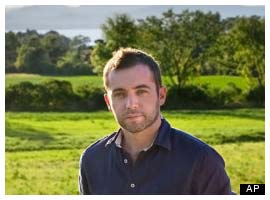
Michael Hastings was that rarest of breeds: a mainstream reporter who was not afraid to rail against the system, kick back against the establishment, and bite the hand that feeds him. On the morning of June 18, 2013, he died in a fiery car crash. But now details are emerging that he was on the verge of breaking an important new story about the CIA, and believed he was being investigated by the FBI. Now even a former counter-terrorism czar is admitting Hastings' car may have been cyber-hijacked. Join us this week on The Corbett Report as we explore the strange details surrounding the untimely death of Michael Hastings.
Published: July 05, 2013
Michael Hastings Sent Email About FBI Probe Tailing Him Hours Before Death
Published: June 28, 2013
What happened to Michael Hastings.? The revelation that Rolling Stone journalist Michael Hastings was working on a story about the CIA before his death and had contacted a Wikileaks lawyer about being under investigation by the FBI hours before his car exploded into flames has bolstered increasingly valid claims that the 33-year-old was assassinated.
Hastings died last week in Hollywood when his car hit a tree at high speed.
According to a prominent security analyst, technology exists that could've allowed someone to hack his car. Former U.S. National Coordinator for Security, Infrastructure Protection, and Counter-terrorism Richard Clarke told The Huffington Post that what is known about the single-vehicle crash is "consistent with a car cyber attack."
Clarke said, "There is reason to believe that intelligence agencies for major powers" — including the United States — know how to remotely seize control of a car.
"What has been revealed as a result of some research at universities is that it's relatively easy to hack your way into the control system of a car, and to do such things as cause acceleration when the driver doesn't want acceleration, to throw on the brakes when the driver doesn't want the brakes on, to launch an air bag," Clarke told The Huffington Post. "You can do some really highly destructive things now, through hacking a car, and it's not that hard."
It's possible that Hastings car was hacked considering the people he had written about in his past and what he recently had been talking about.
Kathleen Fisher from DARPA recently did a presentation on the ease of hacking a standard American sedan. Volvo started the SARTRE (Safe Road Trains for the Environment) program in 2009 and they are now reporting that their testing has been "successfully completed." Hacking of a lemmings train like Volvo's, could lead to massive collisions on the roads and there should be major security concerns considering what recently has been learned.
Hours before dying in a fiery car crash, award-winning journalist Michael Hastings sent an email to his colleagues, warning that federal authorities were interviewing his friends and that he needed to go "off the rada[r]" for a bit.
The email was sent around 1 p.m. on Monday, June 17. At 4:20 a.m. the following morning, Hastings died when his Mercedes, traveling at high speeds, smashed into a tree and caught on fire. He was 33.
Hastings sent the email to staff at BuzzFeed, where he was employed, but also blind-copied a friend, Staff Sgt. Joseph Biggs, on the message. Biggs, who Hastings met in 2008 when he was embedded in his unit in Afghanistan, forwarded the email to KTLA, who posted it online on Saturday.
Here's the email, with the recipients' names redacted.
Subject: FBI Investigation, re: NSA
Hey (redacted names) -- the Feds are interviewing my "close friends and associates." Perhaps if the authorities arrive "BuzzFeed GQ," er HQ, may be wise to immediately request legal counsel before any conversations or interviews about our news-gathering practices or related journalism issues.
Also: I am onto a big story, and need to go off the rada[r] for a bit.
All the best, and hope to see you all soon. Michael
Where is Edward Snowden? Glenn Greenwald on Asylum Request, Espionage Charge; More Leaks to Come
The international mystery surrounding National Security Agency leaker Edward Snowden has deepened after the former U.S. intelligence contractor failed to board a flight as expected from Moscow to Havana today. Snowden reportedly arrived in Moscow Sunday after fleeing Hong Kong. The developments come just days after the United States publicly revealed it had filed espionage charges against Snowden for theft of government property, unauthorized communication of national defense information and wilful communication of classified communications intelligence to an unauthorized person. “The idea that he has harmed national security is truly laughable,” says Guardian columnist Glenn Greenwald, who broke the NSA surveillance stories. “If you go and look at what it is that we published, the only things that we published were reports that the U.S. government was spying not on the terrorists or the Chinese government, but on American citizens indiscriminately.”
- You are here:
-
Home

- News